
-
Material
alloy and condition, not just metal. Include stock thickness and the hardest operation you need.
-
Part
drawing, longest dimensions, required hole sizes, pocket depth and accessible clamping faces.
-
Acceptance
dimensions and tolerances, finish requirements and the method you will use to measure them.
-
Production
how many acceptable parts per week, operator availability and whether a long cycle is acceptable.
In this guide
Turn this guide into a buying request
Keep this page as context. Add what you know; review everything before sending. No purchase is made at this step.
Continue to request →Buy a desktop machine for metal only after the exact configuration demonstrates the material, geometry and accuracy you need. Aluminium engraving, full-width slotting and deep steel pockets place different demands on a machine, even when the finished parts look similar.
For a few occasional parts, outsourced machining or a local workshop can cost less than buying, equipping and commissioning a machine. This guide concerns equipment purchasing, not a machining-service quotation.
Write the job specification first
- Material: alloy and condition, not just metal. Include stock thickness and the hardest operation you need.
- Part: drawing, longest dimensions, required hole sizes, pocket depth and accessible clamping faces.
- Acceptance: dimensions and tolerances, finish requirements and the method you will use to measure them.
- Production: how many acceptable parts per week, operator availability and whether a long cycle is acceptable.
Compare the complete mechanical system
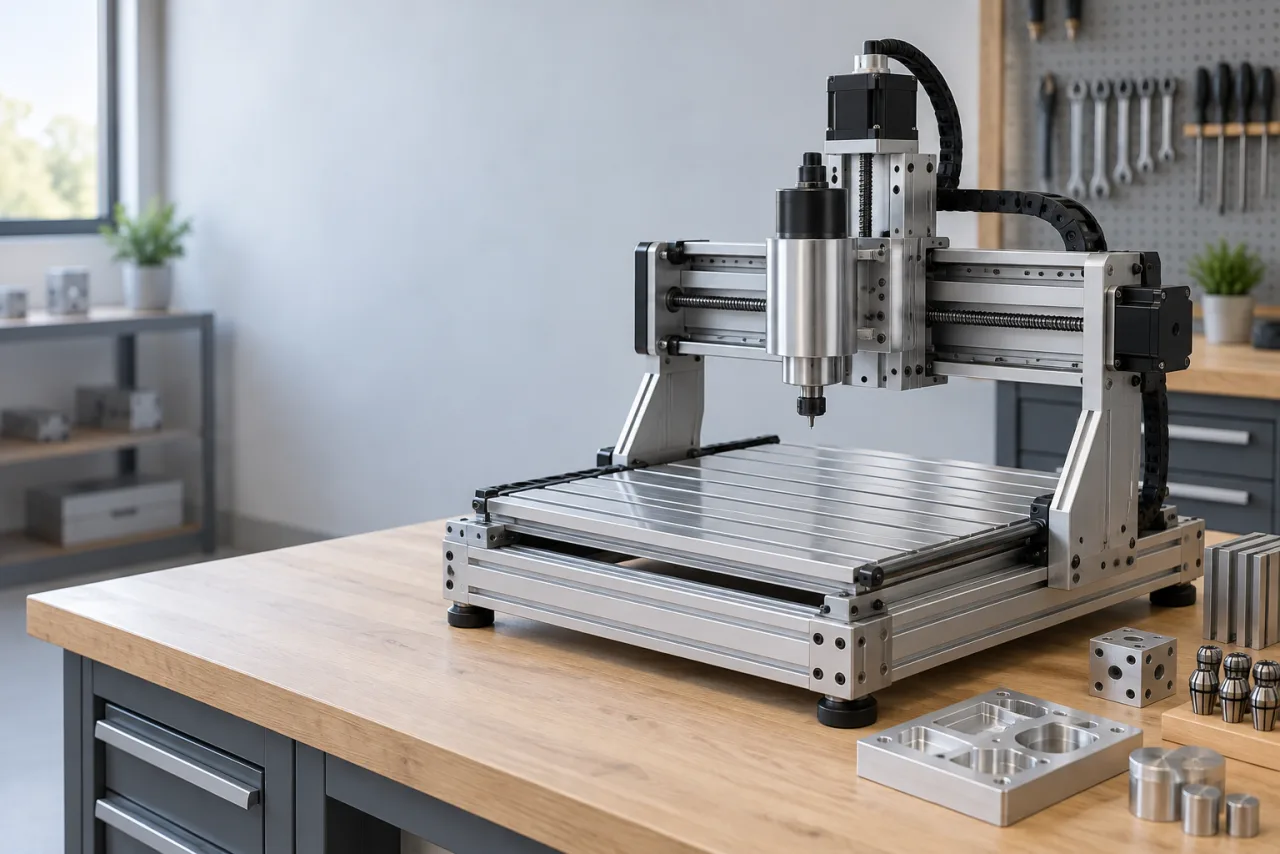
Machine mass is a useful handling input, but does not prove stiffness or accuracy. Frame geometry, joints, spindle bearings, rail support, screw preload, tool overhang and workholding all affect performance. A heavier crate can also contain a larger base or extra accessories.
- A light engraving kit should be evaluated against light work actually demonstrated by that configuration. Do not infer metal capability from a 3018, 4040 or 6040 label.
- For a router, request spindle torque and speed data at the intended cut, supported travel and a test under load.
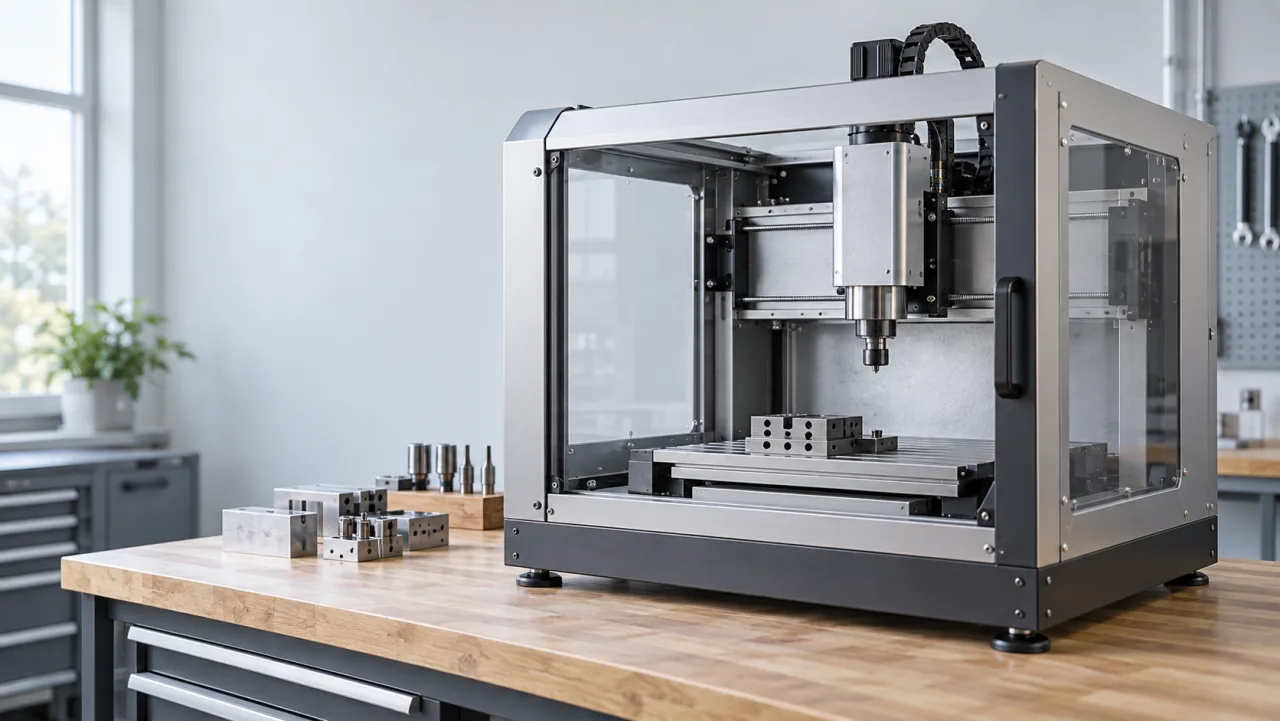
- For a benchtop mill, check travel with the vice fitted, available spindle speed, tooling system and the actual duty cycle. A mill label is not a steel-cutting acceptance test.
A concrete example of why the model revision matters
In our 2 October 2026 document review, SainSmart’s URL ending /3030-prover-max displayed an Ultra heading and selectable Ultra 710 W and MAX 300 W variants. The separately linked MAX manual identifies its own older revision. A stable product URL therefore does not prove that the currently quoted machine has the manual’s configuration.
Record the quote’s exact model, SKU, revision, selected voltage, spindle and included accessories. Resolve a mismatch before comparing price or requesting a test. This is a public catalogue observation, not a finding that a seller shipped the wrong product; we did not buy or test either machine.
SainSmart: current model and variant selectors at the observed product URL ↗
Spindle and tool are a matched choice
Cutting speed, tool diameter and the tool maker’s application data determine a useful RPM range. Available torque and power must then fit that operation. No single spindle wattage or cooling method establishes suitability for all aluminium or steel work.
Ask for a recorded test, not a sparks video
- Identify the tested machine by model, revision and serial number, or state clearly if it is only a demonstration unit.
- Record alloy, cutter model, diameter, flute count, stickout, holder, RPM, feed, axial depth and radial engagement.
- Show the clamping setup, cycle and finished part. Agree the inspection features and pass limits before the test.
- Ask for actual measured results, tool condition and exceptions. A single successful part demonstrates that setup only; it does not establish production capability across every material.
Include safe installation in the purchase
Budget guarding, chip or dust control, suitable coolant equipment, electrical installation and training. Follow the purchased machine’s instructions and have its installation reviewed by a competent person. Do not improvise hand-applied lubricant near a moving cutter or bypass guards to watch a test.
Prepare a comparable RFQ
Send the same drawing, material, output target, acceptance checks and destination postcode to each seller. Request a complete machine configuration and itemised tooling, inspection, packaging and delivery scope. If the test or safe installation cannot be supported, stop before ordering.
What to ask the seller
Get details for the exact item before approving a purchase.
- What model and revision is being shipped?
- Can the seller provide photos of the actual item and its condition?
- What accessories and documents are included?
- What are its packed dimensions and weight?
Plan the CNC inspection
Ask for a photo checklist of the goods received before international shipping.
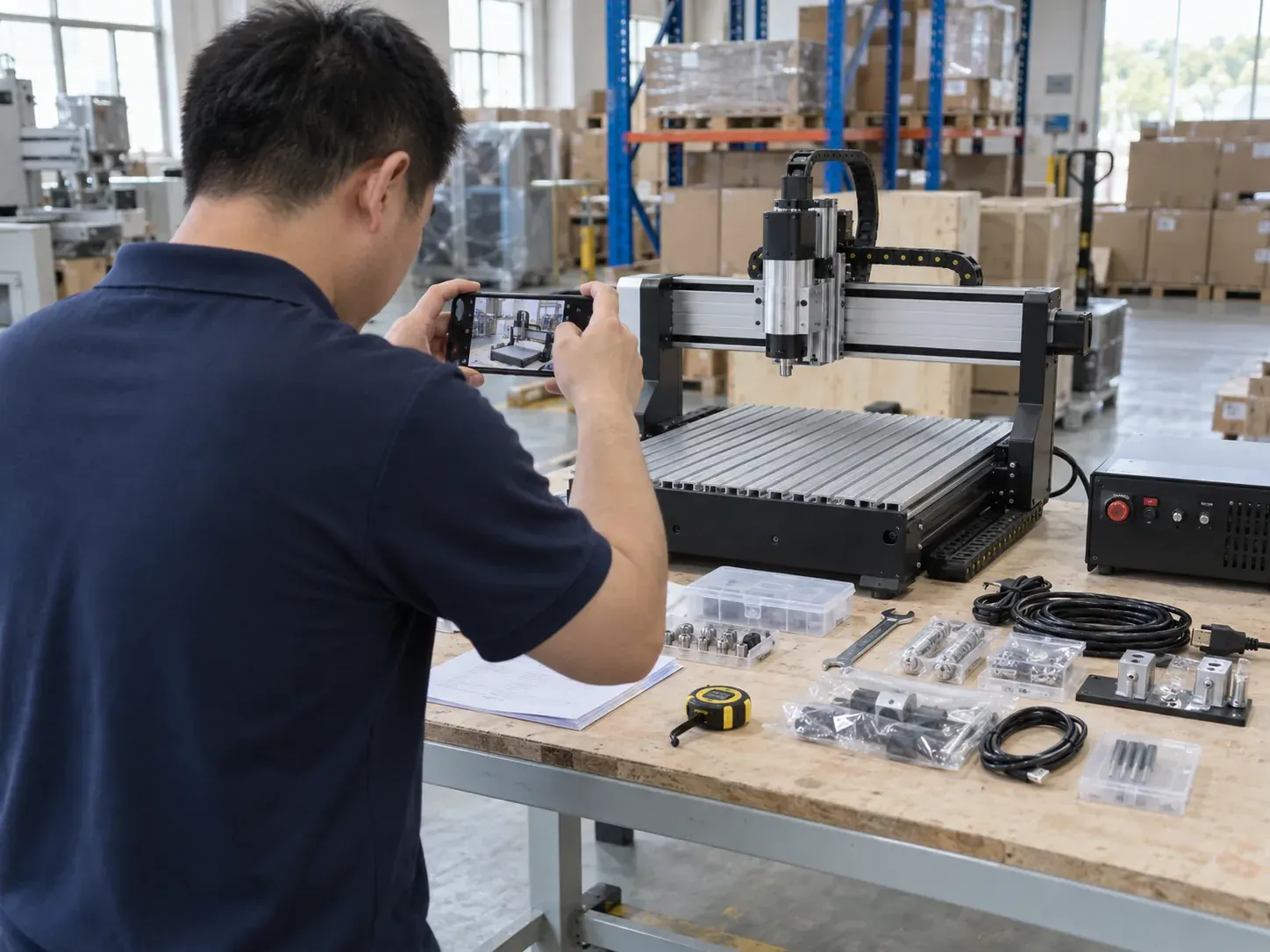
- Item, model and quantity
- Visible condition and included accessories
- Packaging before dispatch
Common questions
- Can a 3018 cut aluminium?
- Some configurations can perform limited aluminium operations, but the model label is insufficient. Require a representative test on the exact spindle, frame, tooling and workholding offered.
- Must the spindle be water-cooled?
- No universal rule applies. Check the manufacturer’s cooling requirements, duty cycle and performance for the proposed operation. Include all required cooling equipment in the quote.
- Is a heavier machine automatically better?
- No. Compare the structure and measured performance. Packed weight is primarily a freight and handling input.
 CNC router vs mill: choose around the part
 Desktop CNC feeds and speeds: inputs, formulas and test records