
CNC Spare Bearings: Check the Bulk-Pack Opening Boundary
Decide whether a bearing kit can be divided without opening its protective pack, and resolve the remaining stock’s status before authorizing the split.
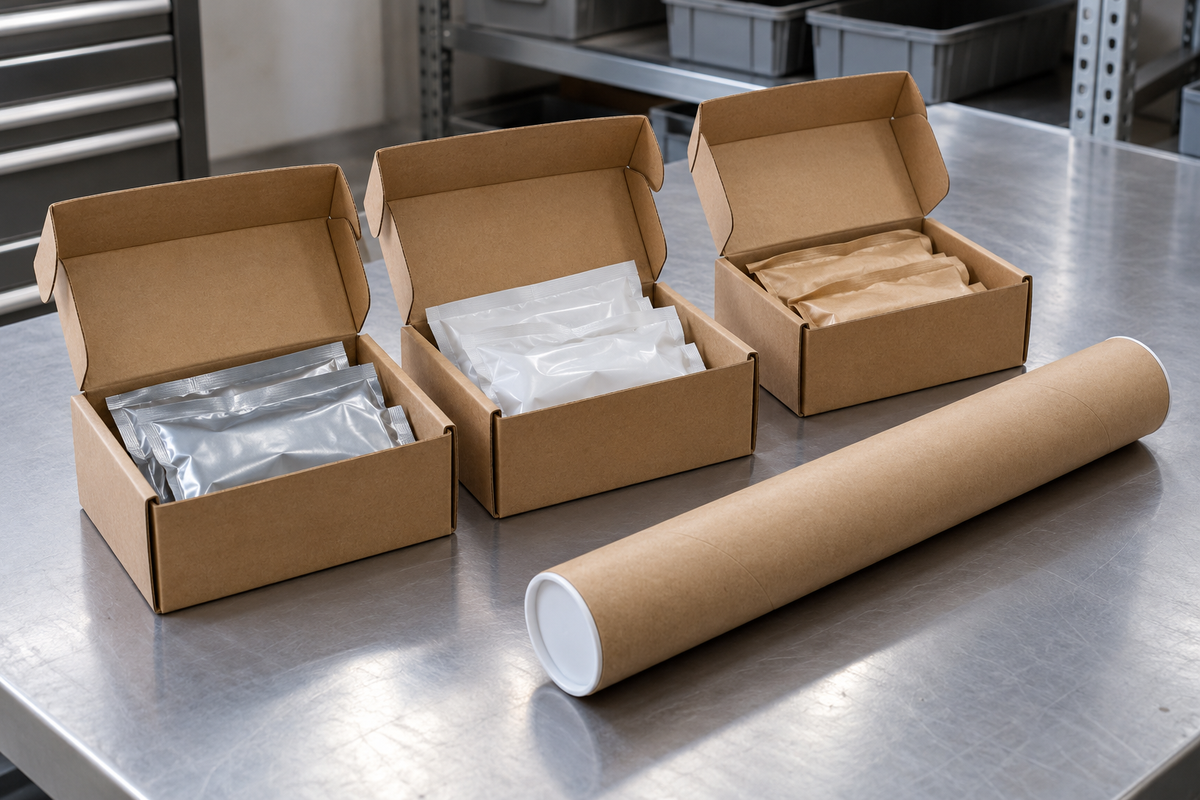
Buying several bearings and issuing one to each maintenance kit are different packaging decisions. The order quantity may be clear while the smallest protected unit is still unknown. Before a consolidated supply is divided, establish whether each bearing has its own protective package or whether several share one enclosing pack.
That distinction matters even when all bearings carry the already-approved part reference. This article addresses the boundary crossed when a bulk bearing pack is opened for kitting. It does not select a bearing, establish matched-set membership, prescribe preservation treatment or decide whether a bearing is fit for installation.
Find the package that actually provides protection
Ask the supplier to describe the supplied packaging levels for the exact order. A shipping case might contain individually boxed bearings, individually bagged bearings, multi-bearing rolls or a shared protective enclosure. “One box of bearings” does not distinguish those possibilities.
NSK Europe’s packaging-material disclosure shows several forms, including individually wrapped and boxed bearings, multiple bearings within a roll, bag or tube, and bulk-packed bearings without individual bags. It explains that packaging varies with the product and whether delivery is intended for an assembly line, short-term stock or longer storage. The document establishes that these forms exist; it does not authorize splitting a particular pack. NSK packaging-material information, version 2, pages 2–4.
Use that distinction to ask a precise question: which layer would the proposed kitting operation open? Removing a secondary consolidation carton can leave every individual protective pack unchanged. Opening a shared enclosure to extract loose bearings crosses a different boundary. Do not infer the answer from brand, box color or a catalogue photograph.
Connect the split to the destination use
State how the individual kit will be used. Will it remain a stored spare, move immediately to an authorized installation process, or wait at another location? Ask the same question about the bearings left behind after the first issue. The residual stock is part of the decision, even if only the outbound kit appears on the packing request.
GMN’s bearing-handling page directs storage in original packaging and removal shortly before installation for its products. We use that limited example to explain why early opening needs product-specific review. Its guidance is not a permission to repackage another maker’s bearings, and no GMN storage-life figure is carried into this article. GMN handling guidance, storage and preparation sections.
Both primary sources were checked on 13 October 2026. The issue-boundary record proposed here is an original editorial method. It is not a preservation specification, and we have not inspected an actual stock lot or confirmed a supplier’s repacking capability.
Ask the relevant manufacturer or authorized provider whether the planned split and subsequent storage are covered by its instructions. If special work is required, identify who can perform it and what evidence will accompany the result. Do not replace that answer with an instruction to use an ordinary bag, add oil or reuse material from another package.
Keep identity and protection as two linked questions
The external kit label should remain traceable to the correct supplied product and the relevant packing record. That does not require opening a protective pack merely to obtain a more attractive photograph. Ask for existing attributable records or an authorized evidence method that preserves the appropriate package boundary.
A copied part number alone cannot describe a change from supplier-sealed bulk stock to individually repacked units. Record the original pack reference, the authorized split, the responsible provider and the resulting package references where those identifiers actually exist. Do not invent manufacturer serial numbers or represent a buyer’s new kit label as a factory seal.
Equally, an intact package is not independent proof of authenticity, remaining storage life or acceptable internal condition. Those questions need their own evidence. Keeping them separate prevents the pack review from becoming an unsupported acceptance certificate.
Work through a fictional service-kit split
Imagine a fictional order for several identical spare bearings, with one bearing intended for each service kit. The supplier calls the delivery “bulk packed.” A coordinator assumes this means individual boxes inside a larger carton and approves the kitting list. The later pack description says the bearings share one sealed enclosure.
The discrepancy concerns the planned opening boundary. Keep the split unresolved and ask the supplier to confirm the supplied form and the applicable permission for individual issue. Do not ask an ordinary packer to open it simply to count the contents or photograph a representative bearing.
One possible response is that the supplier can supply individually protected units under an identified arrangement. The buyer can then compare that supply scope and approve the revised kitting plan if acceptable. Another response may be that the requested split requires a separate authorized process. Its availability, responsibility and evidence must be established before the plan is released.
Now consider the remainder. If a shared pack was opened under an authorized process, the record should explain the status and destination of every remaining unit. “Three sent, seven left” is a stock count; it does not state the preservation basis for those seven. Ask for the provider’s actual disposition rather than assigning a new storage life from the opening date.
If instead the original description proves to mean individually sealed units inside one carton, document that clarification. The individual protection may remain undisturbed by consolidation, but the revised outer packing still belongs with the responsible packing provider. The buyer has resolved the relevant boundary without claiming all packaging is equivalent.
Approve an issue unit, not a generic repacking promise
A useful record includes the exact bearing reference, actual supplied pack form, smallest independently protected unit, layer proposed for opening, intended destination state, maker or provider authorization, and disposition of residual stock. Include the evidence location and unresolved owner for each unanswered point.
Where the split cannot be supported, the purchasing choices may change. The buyer might request a different supplied pack form, retain the bulk unit for the appropriate destination process, or revise how kits are issued. These are alternatives to evaluate with the supplier, not claims that every option is available or that opening necessarily ruins the product.
Close the decision against the actual proposed arrangement. Later substitution of a multi-bearing tube for individual units should return to review even if the product count is unchanged. Conversely, do not treat a cosmetic carton change as proof that the protective boundary changed. Follow the evidence about the inner pack and its intended use.
This packaging decision ends before cleaning, lubrication, mounting or commissioning. A receiving concern or uncertain prior opening history should be referred to the responsible provider, with the uncertainty preserved in the record.
Bring the unresolved packaging decision into the inquiry
We are an independent buying agent. We can help organize supplier questions and documents within an agreed scope; specialist packaging, inspection and technical approval require separate confirmation. The CNC wear parts category provides broader buying context.
Use the CNC quote form for a supported listing link, description or identification images. It accepts up to five PNG, JPEG, WebP or GIF images, no more than 10 MiB each and 20 MiB total. Arrange a separately authorized exchange for manuals, PDFs, drawings or other technical files rather than putting them in the image field.
Frequently asked questions
Does bulk packed mean the bearings are individually protected?
No. Ask for the exact supplied form and the layer that would be opened; bulk descriptions can refer to materially different arrangements.
Can a distributor split a shared bearing pack into service kits?
Only rely on an arrangement supported for the exact product, intended destination state and responsible provider. A packaging-material catalogue does not itself authorize the split.
What about bearings left after the first issue?
Their identity, package status and authorized disposition remain part of the decision. A remaining quantity does not establish a preservation basis or a new storage life.
Does an intact bearing package prove the bearing is acceptable?
No. Package condition is one observation; authenticity, condition and remaining storage suitability need their own applicable evidence.
Sources
Discuss a sourcing request related to this article.CNC Spare Bearings: Check the Bulk-Pack Opening Boundary