
Keep CNC Guarding Acceptance Separate from Appearance
Connect each required protective function to the installed CNC configuration and qualified findings, rather than accepting enclosure photographs as functional proof.
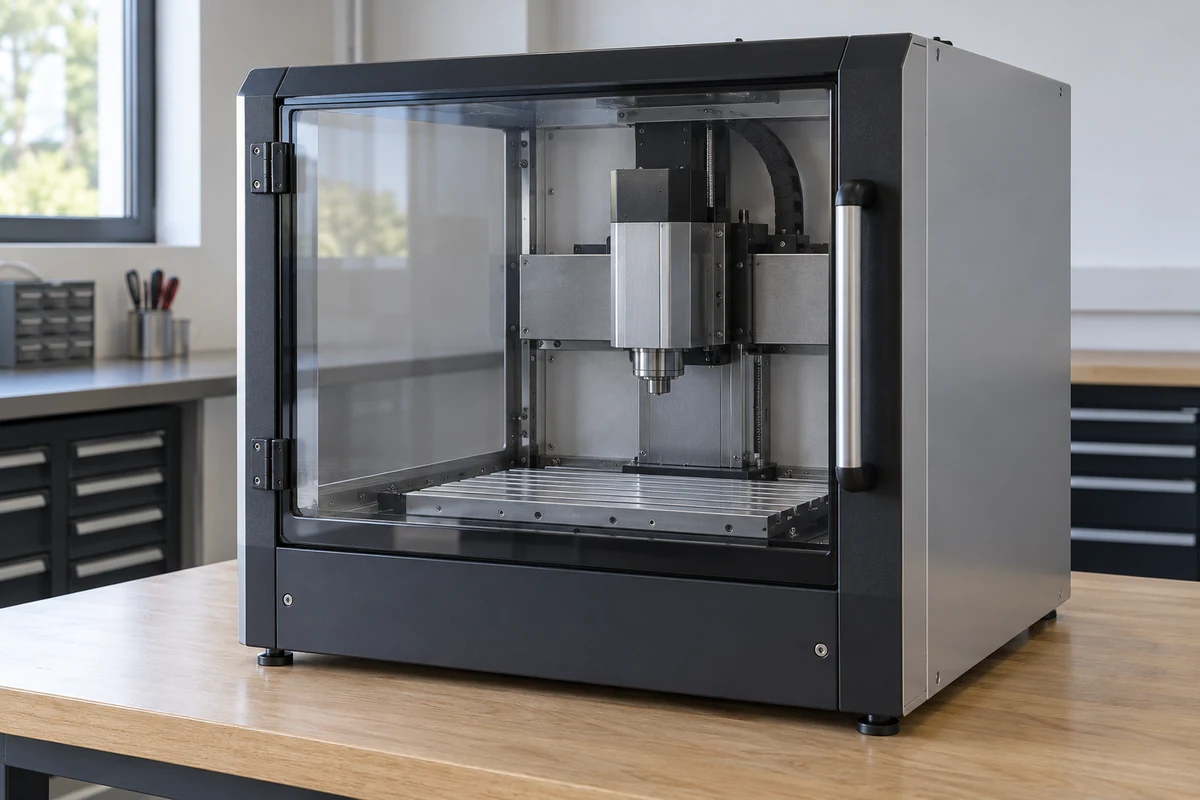
A photograph of a closed CNC enclosure can record its visible condition. Guarding acceptance needs a different evidence chain: the required protective functions, the exact installed configuration, the qualified assessment and the conclusions for that machine. Before marking the guarding requirement complete, ask which of those records are actually present.
This is a buyer’s document review, not a safety test procedure. The machine-specific risk assessment, manufacturer instructions and applicable requirements must be established by competent people. No photograph, supplier reassurance or article can authorize operation while required safety questions remain unresolved.
Name the function rather than the visible component
Start with the accepted safety requirements and their revision. A record saying “door switch fitted” identifies a component or installation claim. It leaves the intended protective function unclear. Ask the responsible assessor to identify what each required function must accomplish and where that requirement is documented.
Pilz’s white paper distinguishes interlocking, which prevents hazardous machine functions under specified conditions, from guard locking, which holds the guard in position. It also describes the safety function as a connected chain of sensor, logic and actuator technology. These are reasons to review function-level evidence rather than infer protection from a switch visible beside a door. Pilz: About guard locking devices, pages 5–6
Do not assume every enclosure needs the same function or that every interlocking device includes guard locking. The required arrangement belongs to the machine-specific assessment. Where both functions are specified, give each its own evidence reference. One product housing can contain distinct functions without making their acceptance questions interchangeable.
Keep emergency-stop, access-related and other specified safety functions identified separately in the requirements list. The assessor should define their scope and relationships. The buyer should not add a generic stop-time limit or choose a claimed performance level from a component advertisement.
Freeze the configuration the report actually assessed
Match the report to the machine identity, enclosure revision and installed safeguarding arrangement. Include relevant control-system or safety-software revision references supplied by the responsible provider. The purpose is to establish whether the report describes what arrived and what was installed, without asking a receiving coordinator to inspect wiring or retrieve restricted configuration data.
Record the report’s stage. A component test, an enclosure supplier’s inspection and an assessment of the integrated machine can address different boundaries. A document issued before final integration should retain that limitation unless the assessor explicitly explains how its conclusions apply to the completed installation.
If a door, switch model, enclosure panel or relevant control configuration changed after assessment, refer the change to the responsible specialist. Ask whether the earlier findings remain applicable and which records require revision. An administrative statement that the replacement is “equivalent” should not silently extend an earlier acceptance to a changed safety function.
Read the declared scope before the conclusion
Pilz describes different validation service levels with different depth and coverage. Its detailed service descriptions distinguish evaluating implemented measures, checking correct installation and testing safety functions. This supports reading the agreed service scope rather than treating the word “validated” as a universal description of everything examined. It does not identify a service level for the reader’s machine. Pilz safety validation scope
Ask for the assessor’s identity, relevant competence information, referenced assessment or test plan, and the results connected to each required function. Record which activities were completed, limited or left outstanding. A qualification or product certificate can support a specific part of the evidence but cannot replace the missing result for the installed machine.
In the UK workplace context, HSE says inspection scope should follow risk assessment and take account of manufacturer recommendations. It also identifies inspection after installation or reassembly where safety depends on installation conditions. That context helps explain why the destination installation can matter; it is not a finding about another jurisdiction or this particular machine. HSE inspection of work equipment
Use a function-to-evidence review sheet
This editorial review sheet connects the requirements already defined by competent people to the evidence returned. It neither designs the protective system nor establishes a mandatory test list.
| Review entry | Question the buyer can ask |
|---|---|
| Requirement reference | Which specified protective function and revision does this row address? |
| Machine/configuration | Which installed machine, enclosure and relevant control revision were assessed? |
| Assessor and plan | Who performed the work, and which authorized plan governed it? |
| Result reference | Where is the actual finding for this function, including recorded limitations? |
| Open deviation | What remains unresolved, and what consequence does the assessor assign? |
| Decision authority | Who may close the issue and authorize the defined next stage? |
Preserve a result’s language. “Not examined” does not mean “failed,” and “no visible damage” does not mean “function verified.” Where a front-page acceptance statement appears broader than the underlying records, ask the report author to reconcile them. Do not choose the more convenient statement and discard the limitation.
Keep any permitted next stage explicit. Authorization for a qualified commissioning activity under an approved plan is different from release for ordinary production use. A receiving administrator should not infer either from the delivery note or from completion of an enclosure-parts count.
Work through a fictional closed-door photograph
Imagine a fictional CNC delivery with a machine-specific acceptance plan that requires documented review of its front-access protective functions. The packet contains enclosure photographs, a switch datasheet and a checklist stating “doors present.” No function-level result is supplied. The buyer has not yet received the final installed-configuration report.
The evidence sheet can record the photographs as visible-condition evidence and the datasheet as information about the identified component, subject to identity confirmation. The required installed-function evidence remains “not reported.” This describes a missing answer; it does not establish that the function has failed or that the component is unsuitable.
The installer then explains that a different access-door assembly was fitted at the destination. Ask it to identify the change and obtain the assessor’s decision on what must be reviewed. Retain the earlier packet with its original scope. A fresh photograph of the changed door can help identify the arrangement, but it cannot complete the absent functional assessment.
Suppose a qualified report later addresses the current configuration and resolves one function while listing another as outstanding. Close only the supported evidence row and retain the assessor’s restriction. The overall release decision must reflect the remaining issue. Do not ask staff to provoke an interlock response, simulate a fault or bypass a guard to produce an informal video.
All events in this case are invented. Its outcome is an auditable handoff to the people authorized to assess and decide, not a declaration that the fictional machine is safe or unsafe.
Close with the assessor’s conditions intact
The final record should identify the assessed configuration, requirement set, result references, outstanding items and responsible release authority. Preserve any limitations in the handoff to the buyer’s installation or operations team. An evidence packet becomes useful when another reader can understand exactly what was accepted and what still prevents the intended next stage.
We are an independent buying agent and can coordinate supplier documents and clarification requests. Guarding assessment and functional acceptance require the appropriate competent provider. See CNC enclosures for the equipment category and use the CNC quote form for an initial listing or description.
The form permits up to five PNG, JPEG, WebP or GIF images, at most 10 MiB each and 20 MiB total. Arrange safety reports, manuals or drawings through a separately authorized exchange. The image upload field does not accept PDF, CAD or ZIP files.
Frequently asked questions
Can a closed-enclosure photograph establish protective function?
It records visible condition within its view. Functional acceptance needs the required assessment and results for the identified installed machine and its protective functions.
Are interlocking and guard locking the same acceptance question?
They are distinct functions. Ask the responsible assessor which functions the machine requires and ensure each specified function has appropriate evidence; do not infer the requirement from appearance.
Does a switch datasheet validate the complete machine?
It supplies information about the identified component. The complete protective function and installed configuration need their own qualified assessment within the agreed scope.
What if an access-door assembly changed after assessment?
Record the change and refer it to the responsible specialist. Preserve the earlier report’s scope until that specialist establishes which conclusions remain applicable and what further work is needed.
Sources
Discuss a sourcing request related to this article.Keep CNC Guarding Acceptance Separate from Appearance