
CNC Packout: Resolve the Machine’s Documented Fluid State
Replace an unexplained dry-machine claim with scoped provider records and maker instructions before approving the affected CNC packing proposal.
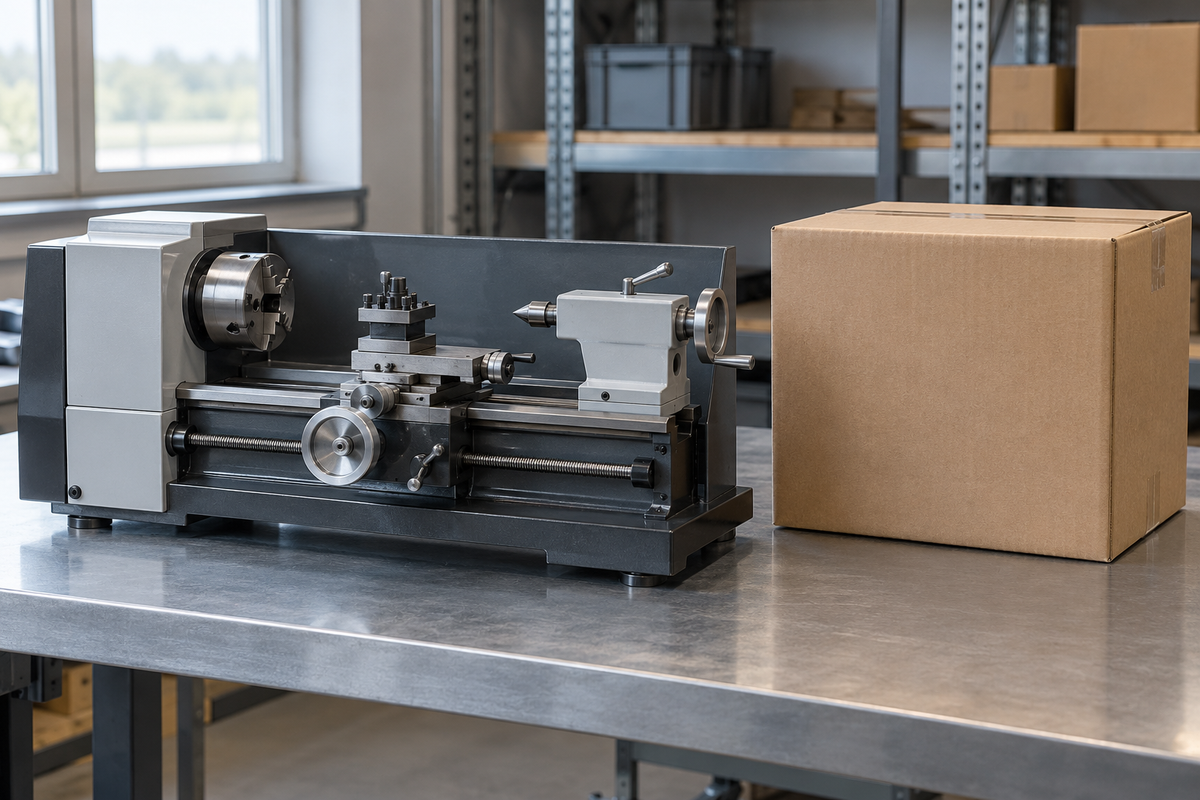
A CNC packing plan should identify the machine’s documented fluid state instead of relying on a single word such as “dry.” Ask what the statement covers, who established it and which manufacturer-authorized transport condition the packing provider is using. If those answers are missing, keep the affected packing decision unresolved.
The immediate issue is an input to packout approval. It is not a request for the buyer to drain, flush, refill or close a machine system. This article offers an original editorial method for comparing state statements and assigning missing decisions. Physical preparation belongs to an authorized technical provider; any transport-classification question belongs to the responsible specialist.
Replace the whole-machine adjective with a defined scope
Begin with the actual machine reference, configuration and unit identity. Ask the seller which fluid-related systems are present and which statement applies to each. Use the machine documentation and attributable service records to establish that scope. Do not populate the record by assuming that every lathe has the same systems or that every CNC machine uses the same fluids.
Tormach’s 8L maintenance documentation lists coolant and way-oil checks separately and has distinct coolant-system and lubrication sections. That is a concrete CNC-lathe example of why a statement about one system leaves another question open. It supplies no transport-state approval and no basis for copying a maintenance procedure into a packing plan. Tormach 8L maintenance documentation
Ask the seller to replace “dry” with an attributable statement about the identified scope. A comment about a coolant tank should remain a comment about that tank. A photograph of a clean exterior should remain exterior evidence. Where the seller cannot establish a system’s current state, record that uncertainty plainly rather than broadening a narrower answer.
Keep three different state questions visible
First, establish what is reported about the unit now. Second, obtain the manufacturer’s applicable transport-state instruction or an authorized technical response for that configuration. Third, request the responsible provider’s record of the preparation actually completed. These entries may eventually agree, but they describe different evidence.
An instruction describes what the provider is meant to achieve. A planned service entry describes work intended. A completion statement describes what its author reports doing or establishing. Treating any one of them as all three can make a packing plan appear ready before its input state is known.
Ask each author to identify the scope, date and relevant machine reference. If a record is limited, preserve its limitation. The goal is not a universal “fluid-free” declaration. It is a packing proposal whose assumptions match the state the responsible providers have actually documented and authorized.
Do not transfer a new-machine supply note to a used unit
Haas’s Knee Mill installation page states that this named machine does not come with oil or coolant. That is a model-specific supply statement for the documented knee mill, not evidence about a CNC lathe or any particular used machine. Haas Knee Mill installation, Fill Coolant and Lubrication section
The useful purchasing lesson is to identify what a source actually describes. A factory supply note may help clarify the original delivery configuration. For a used, demonstrated or serviced unit, ask for current attributable information rather than copying that original statement into today’s packing record.
Apply the same discipline to dates. If a provider recorded a state and later work occurred, ask whether the earlier statement still applies. A later demonstration, service intervention or configuration change should be referred to the responsible provider for reconciliation. The buying agent should not infer the resulting state from an event’s title or from a familiar-looking machine.
Give the packing provider the input it is actually assuming
Ask the packing provider to identify which documented fluid-state statement its proposal relies on. Link that statement to the exact machine and proposed packing revision. If the plan assumes a condition that no responsible provider has confirmed, make that dependency explicit before approval.
Where closures or separate fluid-related accessories appear in the proposal, ask for their documented supplied-state references. An image can help identify what is represented. It does not establish a closure’s suitability, the contents of an obscured system or permission to substitute a different item. This review does not choose plugs, seals, absorbents or packing materials.
Keep unresolved substance information visible for the appropriate specialist. If transport classification or acceptance needs review, pass on the actual available records and identify their gaps. Neither the adjective “dry” nor a completed internal worksheet should be presented as that specialist’s determination. No substance classification or legal shipping declaration is made here.
A fictional seller’s dry-machine statement
Imagine a fictional used compact lathe offered with the note “dry and ready for packing.” The seller supplies an exterior photograph and a message saying the coolant tank was addressed before sale. The proposed packing plan repeats “dry machine,” while the lubrication-system state and timing of later service are unexplained. No real machine, substance or preparation result is represented.
Start by preserving the seller’s exact scope. Ask what its coolant-tank statement means, which provider supplied it and when it was established. Separately request the current state information for the other documented systems and the applicable maker transport-state instruction. Do not transform a tank-specific reply into a statement about the entire machine.
Suppose the seller provides a dated service record but confirms that another service visit occurred afterward. That is useful new information, not a reason to discard either record. Ask the responsible provider to reconcile the later work with the state relied on by the packing proposal. The buyer should not decide which record wins simply by choosing the more reassuring wording.
Once the provider supplies a scoped current statement, the packing owner can review its assumptions against it. Any unresolved transport-specialist question remains separately assigned. If the required state evidence is still unavailable, the affected packout approval remains open; no improvised draining or closure procedure fills that gap.
Build a fluid-state approval record with accountable entries
Use the following editorial fields to prepare a concise document review. They are not a technical checklist or transport declaration:
- Exact machine and supplied configuration
- Each documented system covered by the review, including explicit unknowns
- Seller’s or provider’s current-state statement, source and date
- Applicable maker transport-state instruction or authorized response
- Preparation provider and attributable completion record, where relevant
- Packing proposal’s stated assumptions and any unresolved mismatch
- Specialist referral, decision owner and limits of any returned conclusion
Make unknown, proposed and confirmed information visibly different. Avoid using an empty cell for “none present”; an empty cell can just mean nobody answered. Where a system is not applicable, retain the documentary basis for that entry. The record is useful because it exposes the remaining decision, not because every row appears complete.
Close only the dependency that the evidence resolves
Before accepting the affected packing proposal, have its responsible owner confirm that the documented state matches the assumptions being used. Record any later change that reopens that relationship. Keep destination commissioning and the machine’s broader condition acceptance in their own scopes; a resolved packing input does not establish operating readiness.
An independent buying agent can coordinate the seller’s information and the responsible providers’ replies. The mini metal lathe category provides broader equipment-purchase context.
Start with a supported listing link, description or images through the CNC quote form. Up to five PNG, JPEG, WebP or GIF images are supported, at most 10 MiB each and 20 MiB total. Arrange manuals, service records and technical files through a separately authorized exchange; the image field does not accept PDF, CAD or ZIP files.
Frequently asked questions
What should a seller mean by a dry machine?
Ask the seller to define the exact systems covered, the state it is reporting, the evidence and the date. Do not expand a tank-specific or exterior observation into a whole-machine conclusion.
Does an empty-looking coolant tank establish the lubrication state?
No. Keep the evidence attached to the system it actually covers and request separate information for the other systems identified in the exact machine documentation.
Should every CNC machine be emptied before packing?
This article gives no universal emptying instruction. Obtain the exact manufacturer-authorized transport state and have an authorized provider determine and perform any required preparation.
Can a completed fluid-state worksheet decide transport classification?
No. It organizes the available machine and state information. Any classification or transport-acceptance question remains with the responsible specialist using the relevant records and actual scope.
Sources
Discuss a sourcing request related to this article.CNC Packout: Resolve the Machine’s Documented Fluid State