
Reconcile a Used Lathe's Disclosed Condition with Arrival Evidence
Compare a used lathe’s dated disclosures with arrival evidence, keeping cosmetic acceptance, unexplained bed-area marks and repair history separate.
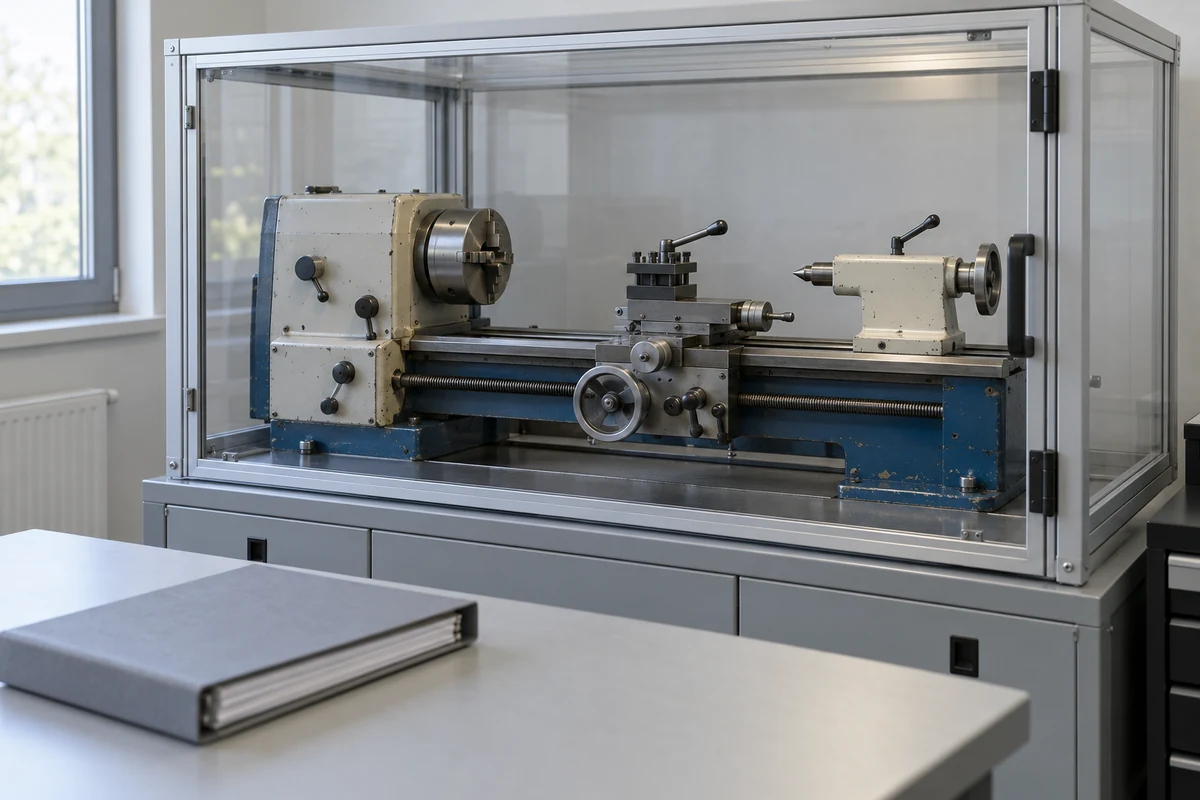
A used lathe’s arrival record should show how the delivered unit compares with the condition the buyer actually accepted. Begin with the dated sale description and supporting evidence, then identify each new difference or unresolved area. A general acknowledgement of worn paint should not quietly become approval of an unexplained mark near a working surface.
The receiving decision is which differences require a commercial response or qualified examination before the lathe moves into commissioning. No actual seller, machine or warranty is assessed here. The method below organizes evidence; it does not diagnose damage, establish legal remedies or provide instructions for running, adjusting or dismantling a lathe.
Tie the condition schedule to this exact machine
Record the model, serial or other documented unit identifier, configuration and dated pre-sale evidence. Connect each disclosure to its location: cabinet paint, bed, carriage, tailstock, spindle assembly, controls or included accessory. Preserve the seller’s original wording alongside the buyer’s response so that a later summary does not broaden what was accepted.
A statement such as “normal wear” needs context. Ask which visible areas, known faults and repairs it describes. Keep an untested function listed as untested even if other parts of the machine were demonstrated. An old photograph can establish what was shown at that time; it cannot establish the condition of a hidden surface or a later delivery.
Give repair disclosures their own entries. Record the component involved, who reportedly performed the work, the date if known, and the returned inspection or service record. “Spindle repaired” may identify a subject for further questions while leaving the parts replaced and post-repair findings unclear. Preserve those uncertainties rather than treating the statement as a restored-performance guarantee.
Locate the mark before calling it cosmetic
Describe an arrival difference in neutral terms and identify its location in existing, safely obtained images or records. “Linear mark beside the carriage, surface not yet identified” is more defensible than “cracked bed” when the image cannot establish a crack. Equally, “probably only paint” can close a consequential question without evidence.
Manufacturer information shows why the surface matters. Sherline’s FAQ discusses minor imperfections in its extruded parts while distinguishing the critical mating surfaces machined afterward. Its reassurance is about that construction and those described imperfections. It should not be transferred to an unidentified mark on a used lathe, a different manufacturer’s bed or a precision contact surface. Sherline FAQ: delivered bed imperfections
Ask the qualified examiner to identify the affected feature from the exact machine documentation and say what examination is needed. Preserve the distinction between an external finish observation, a potential issue at a guiding or mating surface, and a confirmed functional finding. The record should show how the description changed as evidence improved, rather than replacing the original observation with a confident diagnosis.
Keep alignment, wear and appearance as different questions
Sherline publishes separate help topics for headstock/tailstock alignment, gib adjustment, spindle preload and backlash, with different lubrication references for leadscrew and ball-screw machines. That separation is useful when assigning an examination: a broad statement that a lathe “looks clean” leaves those technical subjects unanswered. The listed procedures are manufacturer-specific resources for competent personnel, not directions to apply to another machine. Sherline machine help sheets
Ask which relevant subjects were examined before sale, under what conditions and with what results. Link each report to the unit and the date. Keep a seller’s statement, a qualified examiner’s finding and a buyer’s commercial acceptance in separate fields. They can agree, but one should not be used as a substitute for another.
A pre-sale result also needs its original scope. If it concerned an identified setup before removal from the seller’s workshop, describe it that way. Have the responsible commissioning provider determine what remains to be established at the destination. Do not relabel that earlier result as an examination of the as-installed machine merely because the serial number matches.
Build a location-based condition comparison
Use one row per disclosed item or observed difference. The aim is to reconcile condition, not to rebuild a general shipping checklist or compare used-machine prices.
| Area or item | Pre-sale basis | Arrival evidence | Decision still needed |
|---|---|---|---|
| Painted cover | Dated images and accepted finish disclosure | Attributable current view | Does the observation match the bounded disclosure? |
| Bed-area feature | Identified surface and earlier record, if available | Location-specific observation | Does a qualified examiner need to determine its significance? |
| Repaired assembly | Repair disclosure and supporting service record | Delivered identity and visible differences | Does the existing report cover the delivered assembly? |
| Undemonstrated function | Explicit pre-sale exclusion or unknown | Any attributable new record | What qualified commissioning work remains? |
| Supplied accessory | Agreed identity and condition | Matching receipt record | Is it the same accessory and accepted condition? |
Where the earlier image does not show an area clearly, write “not comparable from the saved evidence.” Absence from a photograph is not proof that a mark appeared during transport. Keep the factual comparison separate from any later decision about responsibility, warranty or recovery of costs.
Resolve a fictional paint disclosure and bed-area mark
Imagine a fictional compact lathe sold with disclosed paint wear on a removable cover and a reported earlier spindle repair. The buyer accepted the photographed paint condition. At arrival, an image shows a dark line beside the carriage. The corresponding pre-sale view is partly obscured, and the repair disclosure has no attached report.
The first entry can say that the visible cover wear appears consistent with the accepted image, subject to the designated review. The bed-area line gets a separate entry: location recorded, affected surface and significance undetermined, comparison limited by the earlier view. The spindle repair remains a third entry with its supporting record missing. None of these entries answers the others.
A supplier responds, “Used machines have cosmetic wear.” Ask it to identify which recorded disclosure covers the particular area and provide any existing clearer evidence. The reply may clarify the history, but it does not establish the mark’s effect on geometry or function. Keep that question with the qualified examiner and retain the original photographs.
Suppose the examiner later identifies the line as being on a non-guiding exterior surface and provides a bounded finding about it. That can resolve that specific observation for the buyer’s acceptance review. It does not prove the earlier spindle repair restored every required function. The missing repair evidence or agreed examination remains a separate open item.
Alternatively, if the examiner cannot determine significance without additional authorized work, record that limitation. Do not pressure the receiving team to clean away evidence, move the carriage or rotate the chuck just to make the paperwork look complete. The example illustrates separate decisions, not a diagnosis or a suggested physical examination procedure.
Define what release actually permits
Name the person who can accept a disclosed condition commercially and the competent provider responsible for commissioning conclusions. If a purchase issue is resolved by agreement, preserve that agreement’s exact scope. Do not turn “accepted appearance” into “approved for operation,” or an agreed repair plan into a completed repair.
The next handoff should identify the actual lathe, outstanding technical questions, records available and any existing restrictions. We act as an independent buying agent and can coordinate supplier information; we do not infer machine health from photographs. The mini metal lathe category provides broader product context.
Start an inquiry through the CNC quote form with a supported listing link, description or images. Up to five PNG, JPEG, WebP or GIF images are supported, at most 10 MiB each and 20 MiB total. Arrange manuals, service reports or drawings separately through an authorized exchange; PDF, CAD and ZIP files are outside that image field.
Frequently asked questions
Does accepting paint wear also accept an unexplained bed mark?
Keep those decisions separate. Compare each observation with the exact disclosure and ask a qualified examiner to identify the affected surface and any technical significance.
Can arrival photographs establish when damage occurred?
They can record visible arrival condition. If earlier evidence is absent, obscured or not comparable, preserve that limitation rather than assigning a cause or time from the image alone.
Does a reported spindle repair establish current performance?
Request the repair scope, supporting records and their relationship to the delivered assembly. The responsible examiner or commissioning provider must determine what the evidence establishes and what remains untested.
What should happen when a mark cannot be classified remotely?
Keep the observation and evidence unchanged, record the uncertainty and arrange the authorized qualified next step. Do not improvise cleaning, movement or disassembly to obtain a reassuring photograph.
Sources
Discuss a sourcing request related to this article.Reconcile a Used Lathe's Disclosed Condition with Arrival Evidence