
Keep a UK Spindle Repair Return Traceable Before Export
Resolve the same-unit repair or exchange branch, preserve spindle identity and obtain procedure-specific advice before overseas collection.
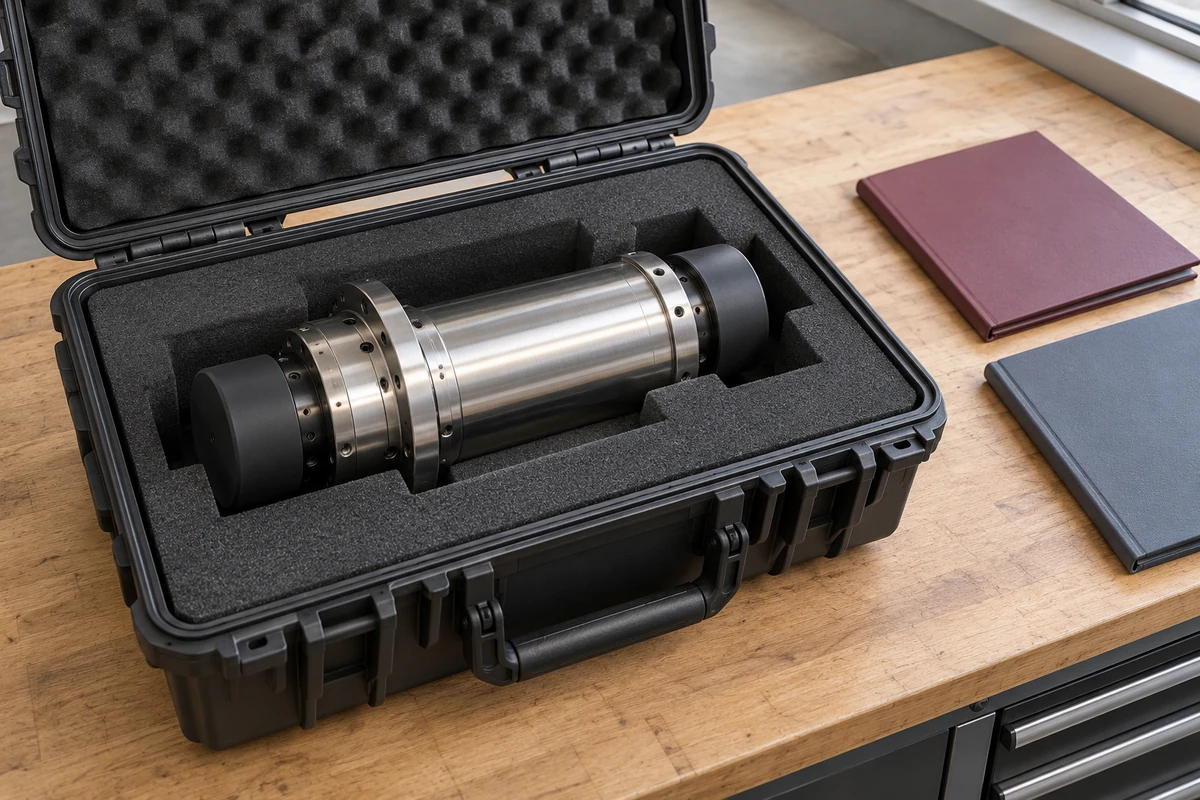
Before sending a UK-owned CNC spindle abroad for repair, ask the customs representative to connect the outbound unit, the intended procedure and the possible return outcomes. The most important question may be whether the repairer will send back that spindle or substitute an exchange unit. A service quote that leaves both options open needs a corresponding documentary plan before collection.
This article starts after overseas repair is being considered. It does not decide whether local repair is preferable or provide a customs declaration, repair procedure or relief ruling. Confirm the actual UK location and route with the adviser, including any Northern Ireland implications, rather than applying one assumption to every movement.
Establish which spindle is leaving
Build the identity record from the documents already available: manufacturer, full model, serial or other unit identifier, original purchase reference and relevant earlier import records. Link the service request to that exact assembly. A machine serial alone may identify the router while leaving a removable spindle unidentified.
Ask the repairer how it will record receipt and maintain the association between its job number and the buyer’s unit. If the serial is unreadable or absent from existing records, tell the customs representative before export and ask what other evidence it will accept. Do not invent a serial or instruct someone to remove covers merely to complete the record.
List accessories separately. A collet nut, cable, sensor accessory or cooling item included with the spindle should have a clear description and agreed return expectation. Record items staying with the machine as well, so a later return list does not assume that a complete spindle package was exported.
Have the procedure reviewed before the transport is approved
HMRC’s outward-processing guidance requires documentary support connecting the re-import to the earlier export and the relief claimed. It treats repair and replacement charges separately in relevant provisions, while free guarantee work is subject to conditions. “Warranty repair” alone does not establish the return’s duty or VAT treatment. HMRC outward-processing guidance
Give the customs representative the actual service proposal, parties, origin and destination, identity record and intended return scenario. Ask it to confirm the appropriate procedure, any authorization needed and the evidence to preserve at each movement. Record its advice and limitations against the service job rather than copying a customs code from an older shipment.
Ask who coordinates the destination country’s import and subsequent export requirements. A UK-side assessment cannot answer every requirement at the repairer’s location. The freight booking should name the receiving party and service reference that the repairer has accepted, avoiding a shipment addressed only to a marketplace seller name.
Separate repair, exchange and additional work
Request a written answer to three commercial questions. Will the same assembly return? Can the repairer substitute another assembly without asking? What happens if the original unit is beyond the agreed repair scope?
For a same-unit return, ask for a service record identifying the unit received, work performed and unit dispatched. A returned serial may support identity while leaving technical acceptance unresolved. Have the technical owner define the required repair evidence independently, including any testing performed by a competent provider.
For an exchange proposal, retain both the exported identity and the proposed replacement identity. Ask the repairer to explain whether the original will be retained, returned later or otherwise dealt with, and have the customs representative review the consequences before the buyer approves that outcome. A replacement that has the same model description is still a different unit for the buyer’s records.
If the service scope changes to an upgrade, paid replacement or additional work, preserve the original offer and obtain an amended proposal. The customs and technical reviews should use that actual proposal. Calling every subsequent transaction a repair can conceal a consequential change in what the buyer will receive.
Keep the service price and return costs attributable
Ask the repairer to identify which charges relate to assessment, repair, replacement, optional upgrades or transport. Preserve the guarantee terms if it says any work is free. Give those records to the adviser rather than changing the invoice description to produce a desired customs result.
Use a compact return file:
| Record | Link that should remain visible |
|---|---|
| Outbound unit | Model, serial or accepted alternative identity and accessory list |
| Export evidence | Adviser-specified records connected to that unit and service job |
| Repairer’s receipt | Its job reference and the identity actually received |
| Changed proposal | Buyer decision on exchange, extra work or other disposition |
| Return documents | Actual returned unit, service description and supporting amounts |
| Closure | Adviser-confirmed customs completion and separate technical handoff |
This file is a purchasing method, not an official checklist for every procedure. The representative determines the records required for the particular movement. Keep any unknown taxes, transport charges or handling costs unresolved until supported; a zero repair charge is not a complete round-trip cost.
A fictional exchange hidden inside a repair offer
Consider fictional spindle S-31, owned by a buyer in Great Britain. The overseas repairer offers a repair under an existing guarantee but reserves the option to send an equivalent exchange unit. The buyer’s collection request mentions only “repair and return.” No prices, eligibility decision or real guarantee are represented here.
Before collection, the buyer asks the repairer to distinguish a same-unit repair from an exchange, and gives both proposed outcomes to the customs representative. The original S-31 identity stays in the record whichever route is eventually agreed. The repairer’s commercial permission to exchange does not itself resolve the customs procedure or the technical suitability of the substitute.
Suppose the repairer later proposes S-92 as the replacement. The buyer first obtains the replacement description, service terms and disposition of S-31. The adviser reviews the changed return scenario, while the technical owner reviews the proposed spindle. Only the decisions actually made are recorded; neither review is silently inferred from the other.
If the repairer cannot identify the replacement until assessment, the uncertainty can remain explicit. Ask what decision will be needed at that stage, who can approve it and whether the original transport arrangement depends on that answer. The goal is to avoid discovering the exchange branch when a return shipment is already being dispatched.
Close both handoffs
After the return, ask the customs representative to confirm what remains to complete the chosen procedure. Keep its response with the actual return records. Separately, hand the spindle’s service and identity information to the qualified commissioning or installation provider. Customs completion does not establish safe operation or restoration of performance.
We act as an independent buying agent and can organize supplier correspondence within an agreed scope. We do not claim customs clearance or spindle-repair capability. The CNC router spindles category provides purchasing context.
Start the CNC quote request with a supported product link, description or identification images. The form accepts up to five PNG, JPEG, WebP or GIF images, limited to 10 MiB each and 20 MiB total. Arrange service reports and customs-document exchange separately through an authorized channel; PDF, CAD and ZIP files are outside that image field.
Frequently asked questions
Does a free warranty repair mean the spindle returns without duty or VAT?
Do not infer the tax result from a zero repair charge. Give the customs representative the guarantee terms, original records and proposed repair or replacement outcome for assessment.
What if the repairer sends a different serial number?
Preserve both identities and the exchange proposal. Ask the customs representative to review the changed return scenario and the technical owner to assess the proposed replacement.
Can the machine serial replace the spindle identity?
It may leave the removable assembly unidentified. Use available spindle records and ask the representative what evidence is acceptable if a serial is unavailable.
Does customs completion mean the repaired spindle is ready to run?
No. Hand the service records to the qualified installation or commissioning provider and complete the separate technical acceptance requirements.
Sources
Discuss a sourcing request related to this article.Keep a UK Spindle Repair Return Traceable Before Export