
CNC Spindle Run-In Handover: Separate Installation Evidence from Warm-Up
A warm-up resource is not automatically a replacement-spindle completion record. Identify the event-specific obligations and the evidence that answers each one.
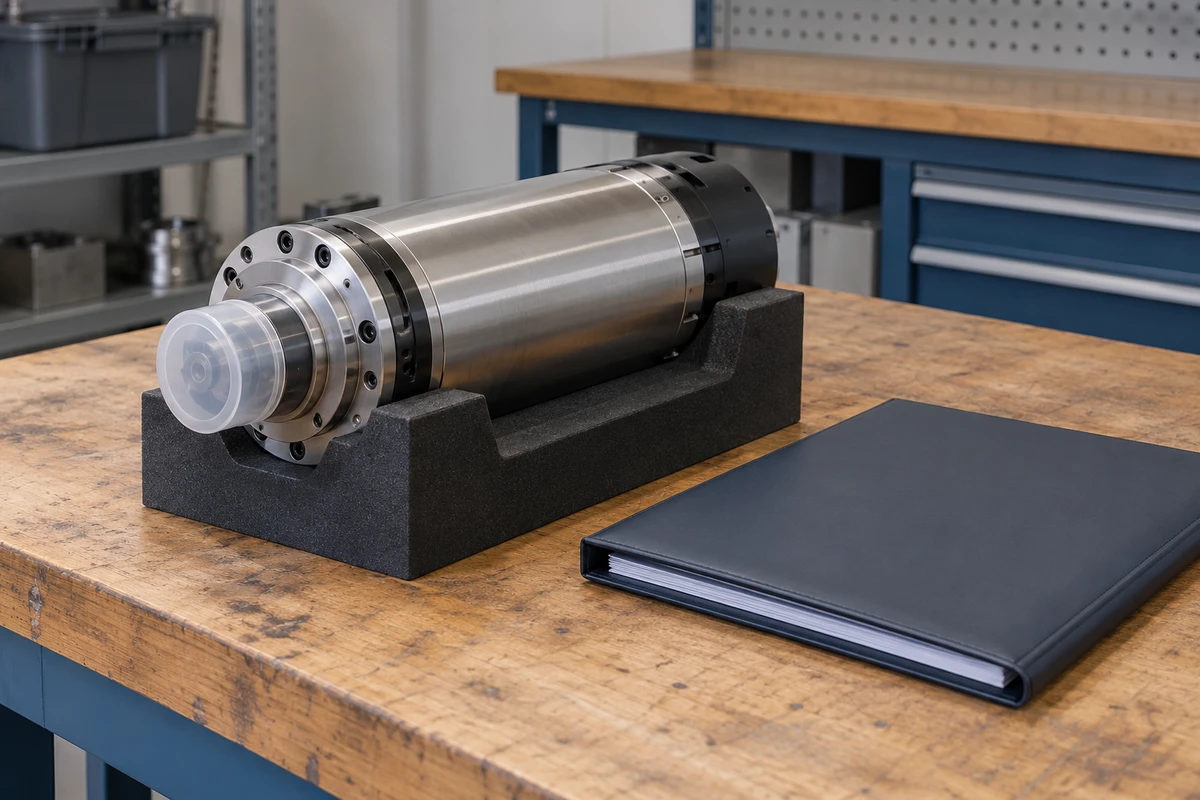
A replacement-spindle handover should explain which maker-defined conditioning obligations apply to the actual installation event and where their completion evidence is recorded. A video headed “warm-up complete” does not automatically answer a promise that installation conditioning has been completed.
The buyer’s decision is whether the applicable obligations are accounted for, including any remaining provider follow-through. It is not a decision to run additional programs. This article gives no operating sequence, speed, duration or physical check, and no actual spindle installation has been assessed.
Define the event behind the completion claim
Start with the replacement spindle’s identity, the machine reference and the documented installation or service event. Ask the provider to explain what changed and what the handover statement covers. Delivery of an uninstalled component, a completed replacement installation and the transfer of a previously used machine are different documentary starting points.
Retain the event date separately from the shipment date and the date the record was issued. A recent document can describe earlier work; a newly delivered spindle is not necessarily evidence of a newly completed installation. If the event itself is unclear, resolve it before asking which conditioning record is missing.
Use the maker’s terminology in the request. A seller may use “run-in” loosely for any video of a turning spindle. The qualified provider needs to identify the actual obligation rather than accept the heading as its definition.
Preserve the distinctions in the manufacturer example
Haas reference RD0064, Revision A of July 2025, separately presents run-in, warm-up and break-in resources. Its run-in discussion concerns installation; warm-up has operating-history context; break-in addresses a newly installed spindle. The page also distinguishes Classic Haas Control and Next Generation Control resources. These are Haas mill examples of different purposes and applicability, not interchangeable labels. Haas spindle programs reference RD0064
Three headings on that page do not create a universal three-stage obligation for every replacement. Ask the actual maker or qualified provider which requirements apply to this spindle, machine, control and event. A non-applicable entry needs an attributable explanation, not invented completion evidence.
Preserve run-in, warm-up and break-in as separate source terms in the document register. The purpose is to prevent a broad summary from obscuring what the provider actually says was required and completed. It does not authorize the buyer to assemble a sequence from the linked resources.
Request instructions and performed-work records separately
An instruction reference identifies what governs an activity. A completion record identifies the work the provider says occurred. Keep separate fields for both, even if the supplier delivers them in one folder.
For an applicable one-time obligation, ask for the spindle and machine association, the event covered, the governing procedure issue, the responsible provider and its completion or disposition record. If the evidence has qualifications or exclusions, retain them beside the conclusion. A signature without a clear unit or event cannot supply the missing association.
For continuing warm-up guidance, ask for the applicable instruction reference and the party receiving responsibility under the actual handover arrangement. Receipt of that guidance is a different deliverable from evidence that installation-related work was completed. Do not mark future care “performed” merely because its instructions arrived.
A video can be part of a provider’s evidence, but its caption alone cannot define the activity or completion basis. Ask the provider to link it to the specific record it supports. This avoids either dismissing useful evidence because of its format or overextending it because it looks persuasive.
Resolve control-generation and spindle applicability
Ask the provider to connect each supplied resource to the actual control generation and spindle variant. Keep a general manufacturer reference distinguishable from the provider’s applicability statement for the delivered installation.
If the packet mixes resources for different controls, return the inconsistency to the author. The buyer should request a corrected association and an explanation of whether any previous completion claim is affected. It should not choose a resource by filename, copy program content or attempt a run to identify which version works.
A replacement of a document is also different from a replacement of work evidence. If the provider corrects an instruction link but the original completion record remains applicable, it should say why. If further qualified review or work is proposed, retain that as a new authorized scope rather than quietly backdating the closeout.
Work through a fictional warm-up-only packet
Imagine a fictional replacement order in which the supplier writes “spindle run-in complete” and sends a routine warm-up clip. The packet identifies the replacement spindle but does not state which installation-event obligations applied or which one the clip documents.
The buyer asks the installer to reconcile the claim, the governing requirement and the supplied evidence. It does not demand all three activities mentioned in the Haas example, and it does not prescribe an additional run. The installer must first establish applicability for the actual event.
Suppose the reply identifies an applicable installation obligation and supplies its attributable completion record. The clip is then retained only for the role the provider assigns it. The buyer can close that document gap while separately recording receipt of the ongoing instruction reference.
Alternatively, the provider may identify an unfinished obligation. The handover should name the remaining scope, its responsible party and the actual agreed next decision. Do not invent a completion date or assume the work is included free of charge. The commercial and technical owners must settle any changed assignment.
Finish with an obligation-specific closeout
Record each applicable obligation with one of the provider-supported outcomes: completion evidenced, evidence awaiting clarification, or work still outstanding. Keep non-applicability explanations separately visible. This is more useful than a single “spindle ready” box that conceals what the provider reviewed.
The result is a traceable replacement-event handover, alongside continuing instruction references. It does not establish spindle performance, complete commissioning or release the machine for use. Those decisions remain with their authorized technical owners.
Buyer document-review worksheet
This original worksheet organizes the provider’s evidence. It is not a manufacturer form or a technical work instruction. Keep the original source reference beside each answer.
| Field | Answer to obtain |
|---|---|
| Replacement spindle identity | Exact unit and machine association |
| Installation event | What work event the statement describes, with its date |
| Applicable maker requirement and control scope | Provider-declared applicability and any non-applicability basis |
| Instruction reference | Correct maker resource for the actual variant and control |
| Provider completion record | Attributable performed-work evidence with scope and limits |
| Unfinished obligation | Actual pending scope, assignment and agreed next decision |
| Qualified disposition | Qualified conclusion distinct from operational release |
Bring the precise gap into the inquiry
For broader product context, see CNC router spindles. As an independent buying agent, we can coordinate supplier questions within an agreed purchasing scope. Specialist work, its availability and its approval require the responsible qualified provider.
Start a CNC quote request with a supported listing link, description or permitted product images. Arrange manuals, drawings, data files and service records through a separately authorized exchange; the form’s image field is not a technical-file upload channel.
Frequently asked questions
Is spindle warm-up the same as installation run-in or break-in?
Do not treat the terms as synonyms. Preserve the maker’s named purpose and ask the provider to map the supplied evidence to the actual event-specific obligation. The cited Haas resource distinguishes them.
Must every replacement spindle complete all three named activities?
This article establishes no universal sequence. The actual manufacturer and qualified provider determine which obligations apply to the spindle, control and installation event, with an attributable explanation for their conclusion.
What evidence should a spindle-conditioning completion record include?
Request the identified unit and installation event, the applicable requirement and procedure issue, the responsible provider, and its recorded outcome with limitations. Keep that record distinct from the instructions themselves.
What should a buyer do with a warm-up-only video?
Ask its author which obligation it supports and request the associated record. If applicability or completion remains unclear, keep the documentary item open; the buyer should not prescribe an additional spindle run.
Sources
Discuss a sourcing request related to this article.CNC Spindle Run-In Handover: Separate Installation Evidence from Warm-Up